
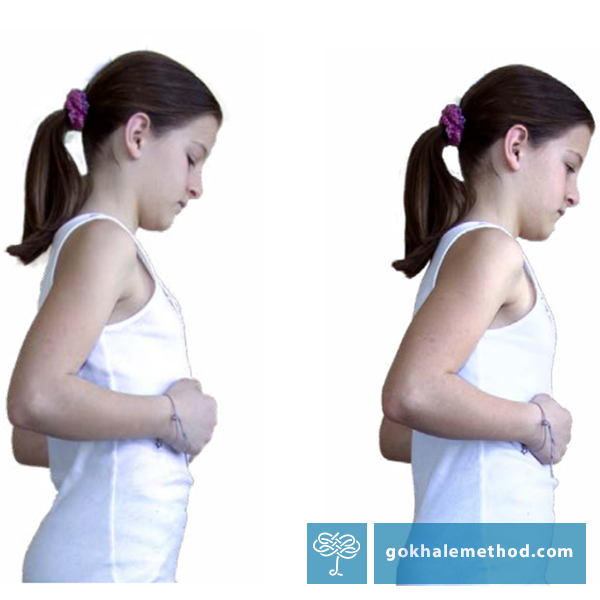
Choose your remedies carefully
There are many approaches to stretching tight back muscles that involve rounding the back. Though these exercises give temporary relief, we recommend against them because they threaten the spinal discs, nerves, and ligaments. They can also result in the back muscles contracting even more tightly to stabilize the area.
Posture Tips for Meditators
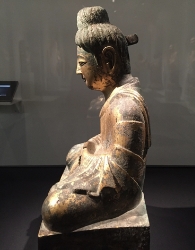
It has been over 60 years since Eastern schools of meditation became widely known in the U.S. and Europe, and meditation became widely practiced, with over 14% of Americans having meditated at least once. If we include those practicing mindfulness techniques, using meditation apps, and attending yoga classes with a meditation component, this figure goes far higher.
The effects of sitting in meditation
The potential benefits of meditation are well known, and include a calmer, clearer mind, lower levels of stress, better sleep, improved relationships with others, and better mental health.
From a posture perspective, whether you sit in meditation regularly or are just getting started, you want the experience to be as healthy for your body as it is for your mind.
How Do I Fix My Neck Pain?
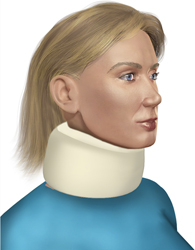
Do you suffer from neck tension, muscle knots, or tingling in your fingers? Do you get frequent headaches?
Or maybe your neck is fine most of the time, but seizes up periodically, leaving you unable to function normally in your job, family life, and recreational activities.
Most neck pain involves compression.
In modern cultures, the head often drifts forward as we slouch and crane our necks towards our computer screens. The weight of the head, (typically 11 lb. or 5 kg—think bowling ball), then requires the muscles at the back of the neck to contract strongly to keep the head up. This contraction compresses the relatively delicate tissues in the area. Not a recipe for a healthy, happy neck. If you have forward head carriage but are symptom-free so far, keep reading for tips that will prevent future problems with the discs, nerves, blood vessels, and bones in your neck.
The Gokhale Method is Nonnegotiable For Me

At the beginning of the pandemic, my tween daughter was the dancer in my house. When her in-person hip-hop class was canceled, she quickly turned online for inspiration, showering me with her 30-second Tik Toks.
I was amused, but resolute that dancing online was not for me. I had my own exercise regime, at the heart of which were a series of Pilates-based exercises that I had incorporated in the hopes of healing a nagging injury.
But now, 16 months into the pandemic, I’m dancing online too, maybe even more than my 12-year-old. This is thanks to Esther Gokhale and her unbelievably fabulous community who, like me, wanted to find a safe, therapeutic, and fun way of exercising after injuring our backs.
I first heard Esther years ago on a podcast and subsequently checked her book 8 Steps to a Pain-Free Back out of the library. I remember being especially interested in the pictures of women holding their babies so comfortably; I had recently given birth, and I tried my best to imitate the women pictured.
Cultivating a J-Spine with Chair Pose (Utkatasana)
As a student and teacher of yoga and practitioner of the Gokhale Method, I choose yoga poses that make good use of my time. “Chair pose” is well worth the time investment. In fact, it has become one of my favorite strength-building postures. It is useful for cultivating a J-shaped spine. It helps increase gluteal tone. It helps to pattern healthy hip movement. It is strengthening for the legs and spinal stabilizers. And, last but not least, it allows a yoga practitioner to smoothly transition between a standing forward fold and mountain pose — without compression of the intervertebral discs.
Cecily Frederick in chair pose with J-spine visible, overlaid with SpineTracker™ snapshot.
Detail of