
A Tucked Pelvis is a Stuck Pelvis
Unexpected health improvements
Over the years, aside from improvements in pain levels and posture, I’ve witnessed many students experience unexpected health transformations—improved digestion, relief from painful periods, the end of incontinence worries.
Once we understand what is happening structurally inside a tucked pelvis, this actually makes sense.
The pelvis is home to many organs
The word pelvis is Latin for ‘basin’. It acts as a protective container for several organs—the bladder, ~25 feet of intestines, the uterus, and ovaries. These organs need space, good blood and lymph flow, and unimpeded innervation to function well.

Healthy body architecture allows the pelvic organs the space they need to function well. Image from Pexels
When the pelvis is in its natural, anteverted position, the pubic bone sits underneath the pelvic organs. It acts like a bony shelf. The pelvic floor muscles lie largely behind rather than beneath the organs. The pelvic floor muscles are not primarily required for support and can instead perform their job of controlling bladder and bowel function.
When the pelvis is tucked—as most adults in our society have come to do—that bony shelf moves forward. The pubic bone no longer supports the organs from below. Instead, the relatively small and weak muscles of the pelvic floor are left to bear a load they were never designed to carry.
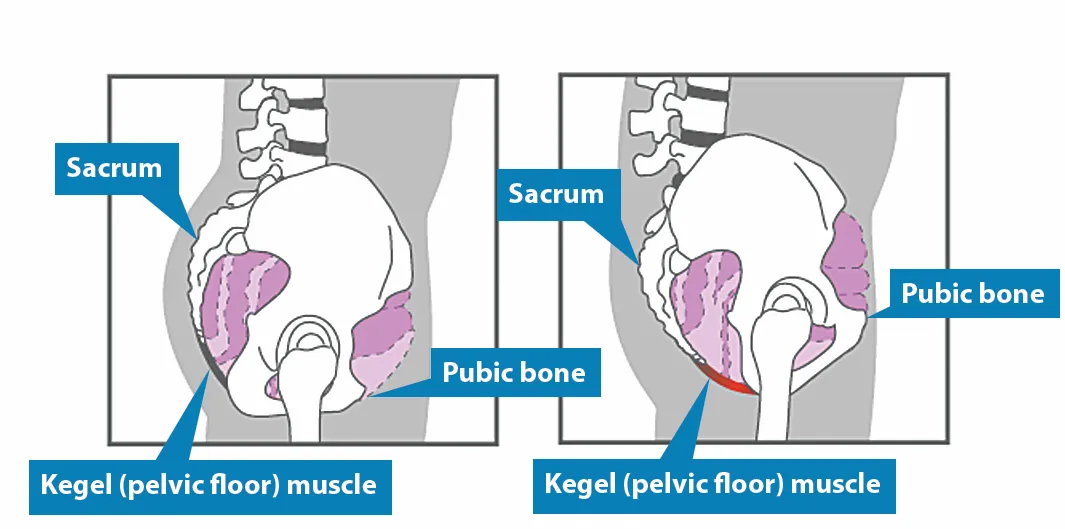
When the pelvis is in its natural position, prolapse is biomechanically unlikely (left). When the pelvis is tucked, the pelvic organs lack bony support and the Kegel muscles are overtaxed (right).
What happens when the pelvic organs are compressed
A tucked pelvis reduces the space in the pelvic cavity by about 30 percent. This is not an insignificant amount. The organs are crammed. Blood vessels are constricted. Nerve supply is impeded. Lymphatic drainage stagnates.
When we understand this, a number of seemingly unrelated conditions begin to make sense as variations on a single theme:
- Pelvic floor dysfunction, incontinence, and prolapse. With the bony support of the pubic bone displaced, the pelvic floor muscles are chronically overloaded. They get fatigued, or—with enthusiastic Kegel exercises—too tight. But no amount of Kegels will make these muscles fit for a job they were never designed to do.
- Digestive trouble. The intestines occupy a considerable portion of the pelvic cavity. When that space is cramped, sluggish digestion, bloating, and constipation are not surprising results. Restore the space and the intestines can function normally.
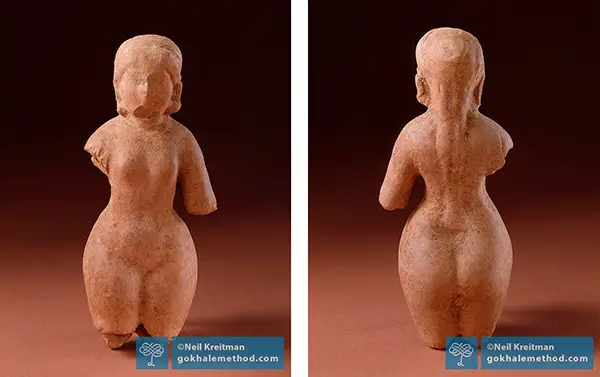
This 1st Century Pakistani fertility goddess statue displays an anteverted pelvis, with plenty of space in the pelvic cavity for her uterus and ovaries. Image from Wikimedia Commons.
.jpg)
- Fertility challenges. For conception to occur, good circulation throughout the reproductive system is desirable. I have seen students with long-standing fertility difficulties become pregnant after working on their posture. I’m not claiming posture as a fertility treatment, but it is logical that restoring natural architecture improves bodily function.
- Menstrual cramps. Compression and reduced circulation in the pelvic cavity can disrupt the function of the uterus and ovaries. Many students report that their menstrual pain eases—sometimes significantly—once they restore natural pelvic architecture.
You can regain the space you’ve lost
The good news is that the pelvis can be untucked— a tucked pelvis is not a permanent condition! It is simply a bad habit—a product of modern furniture and some fitness cultures. And like any habit, it can be changed with guidance and practice. It can even be fun.
Learning to inhabit a naturally anteverted pelvis is not about forcing a new position. Instead, it’s about gently releasing muscles that have been chronically contracted while building tone in muscles that have been chronically slack. Through tweaks to your everyday movement habits—like sitting, sleeping, standing, and walking—the pelvis can return to its natural position and provide the spacious, protective home that our organs need to thrive.
Free Workshop July 3rd
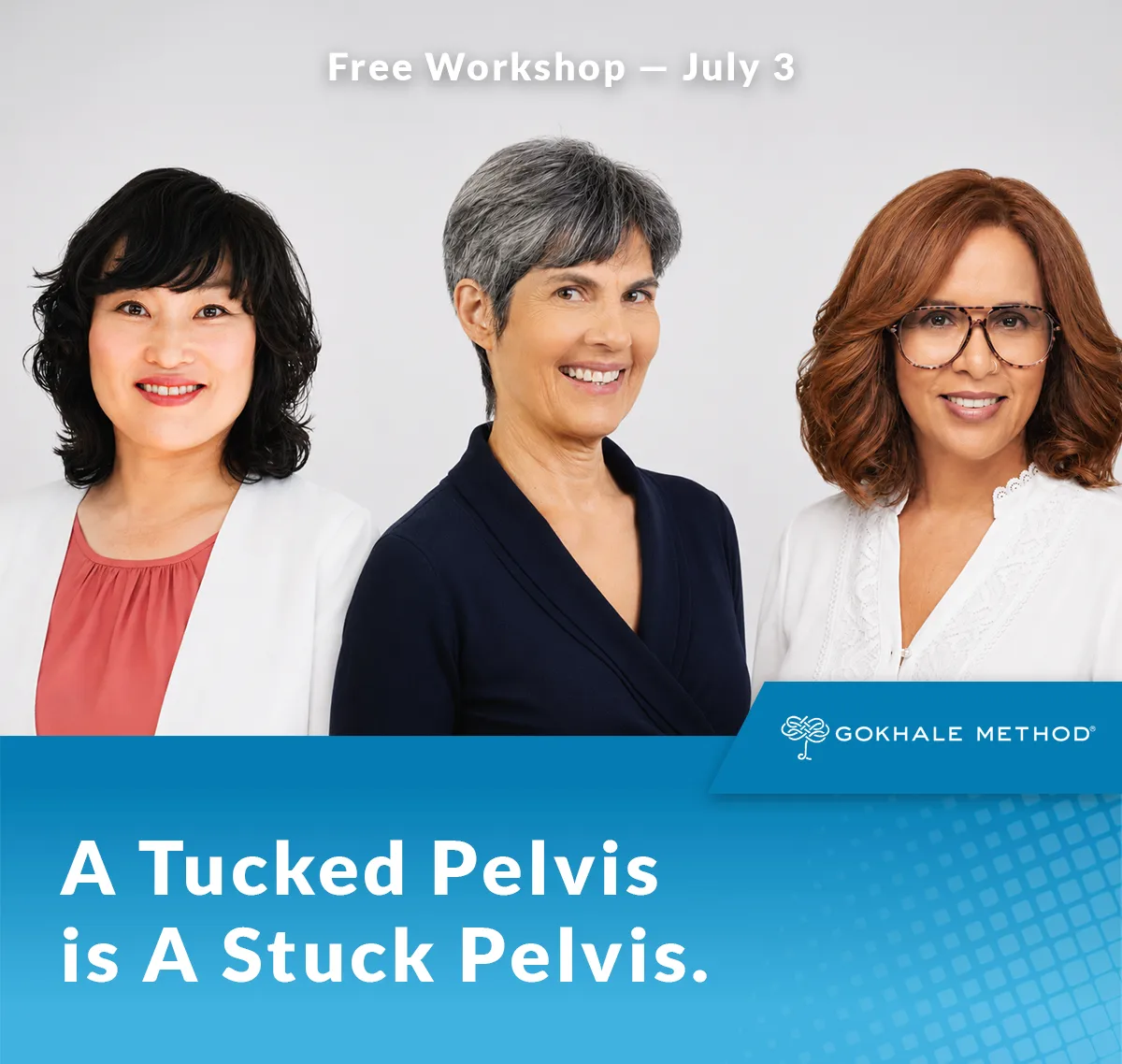
Interested in learning more? Join the Pelvic Freedom: A Tucked Pelvis is A Stuck Pelvis workshop — with myself, Dr. Nam Lee, and Dr. Melissa Fernandez. It’s free and live on Zoom at 12pm on Friday, July 3 (or register to receive the recording if you can’t make it live).
Comments
Add New Comment
Login to add commment
Login