
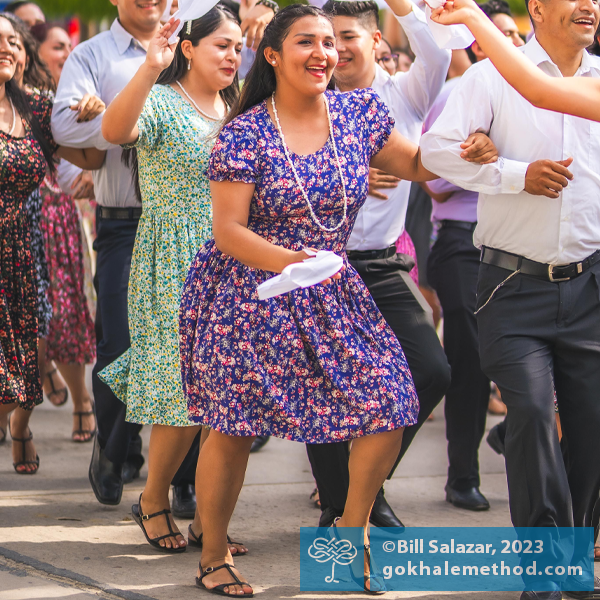
In my last blog post, we explored what happens inside the body with a chronically tucked pelvis — the compression of organs, the overburdened pelvic floor, and the cascade of health consequences. Today I’m asking: why is healthy pelvic movement an integral part of some cultures and not others? And how can you get back in touch with your natural range of movement?
A Tucked Pelvis Is a Stuck Pelvis
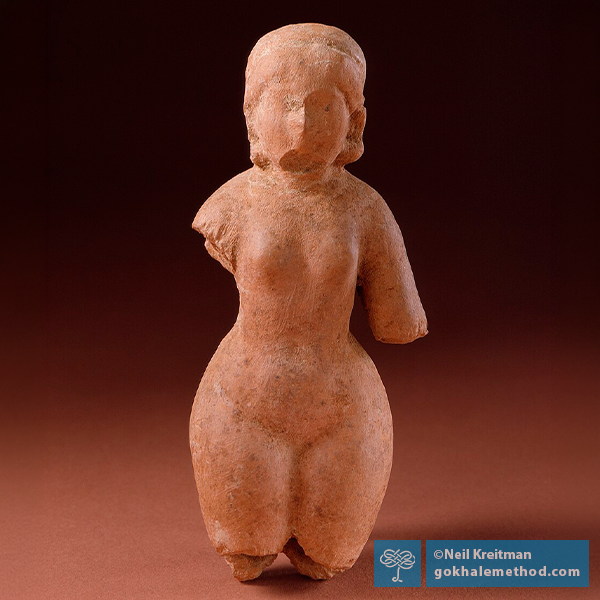
Over the years, aside from improvements in pain levels and posture, I’ve witnessed many students experience unexpected health transformations—improved digestion, relief from painful periods, the end of incontinence worries. Once we understand what is happening structurally inside a tucked pelvis, this actually makes sense.
Middle Eastern Dance: not Belly Dancing, it’s Inner Corset Dancing
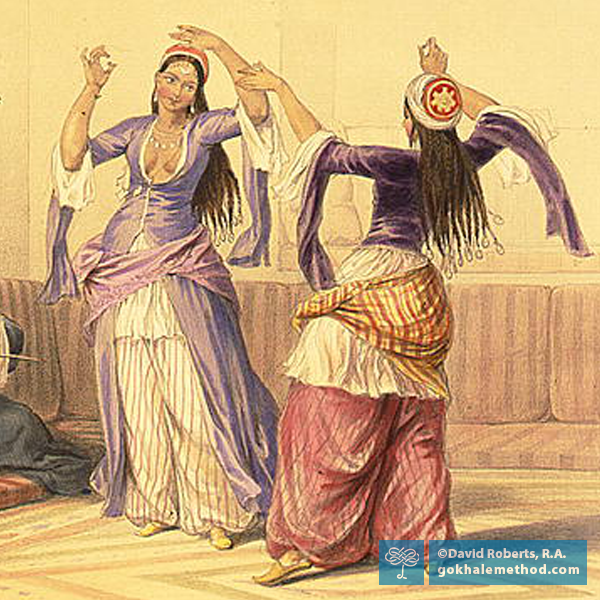
This summer, Gokhale Method® teacher Donna Alden stepped in for Lang Lui and brought a unique and enriching twist to our daily 1-2-3 Move program. Drawing on her expertise in traditional Middle Eastern dance, Donna treated us to a beautiful blend of cultural movement and posture wisdom. It’s no coincidence that many traditional dance forms are rooted in healthy, natural posture—and Middle Eastern dance is no exception.
Women’s Empowerment Through Posture
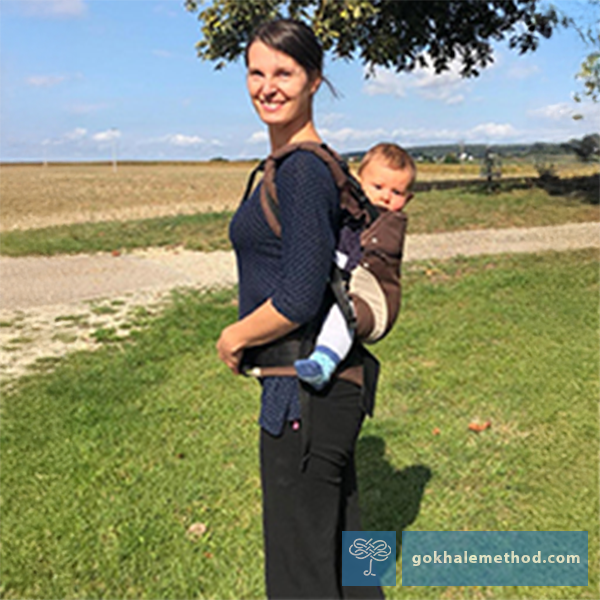
As we approach International Women’s Day on March 8, I would like to share a few observations regarding gender and health made over the past three decades of teaching posture.
Does gender affect back pain?
Back pain and the posture distortions behind it are very democratic—people of all ages, activity levels, geographic locations, and gender are affected by cultural postural distortions. That said, some modern posture guidelines and expectations are gender-specific, and some of them affect women disproportionately. We will discuss posture guidelines for men another time. In this post, I’d like to address some of the messaging that is relentlessly addressed towards women and girls, and the consequences of this messaging.