
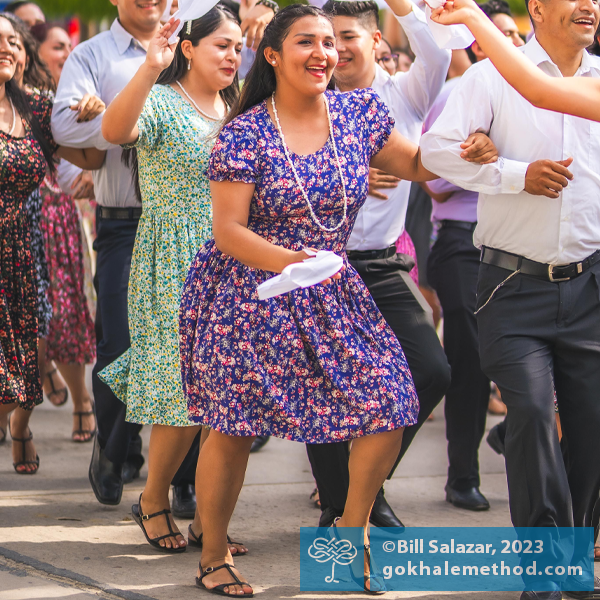
In my last blog post, we explored what happens inside the body with a chronically tucked pelvis — the compression of organs, the overburdened pelvic floor, and the cascade of health consequences. Today I’m asking: why is healthy pelvic movement an integral part of some cultures and not others? And how can you get back in touch with your natural range of movement?
Why Healthy Glutes Reduce Aches and Pains
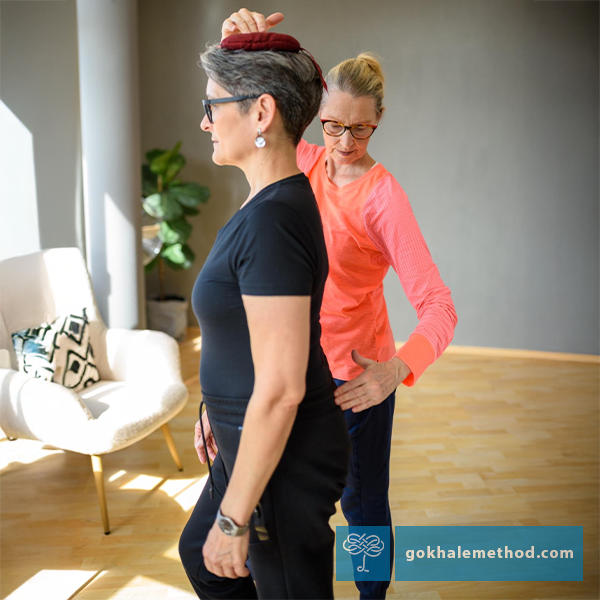
Over the decades that our students have gotten out of pain by learning the Gokhale Method®, it has become clear that healthy glutes are essential in this. Well-functioning glutes hold the key to unlocking many poor postural habits, and contribute to better biomechanics and movement. Good glute function will often solve pain and enable healing in apparently unconnected areas of the body. Let’s take a look at some of the common, and sometimes surprising, aches and pains that respond to our glute training…
Wake Up Your Glutes, They Snooze, You Lose
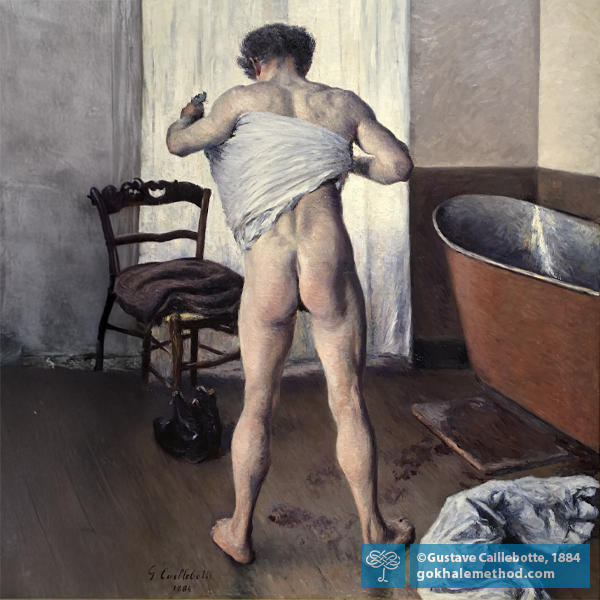
In surveys of what people find physically attractive in a partner, a shapely butt is often highly rated. Perhaps it’s no surprise, but if you want, there are even apps to help! So, are good-looking glutes all about sex appeal and filling out our clothing in a flattering fashion? While these concerns may be valid, it is also true that well-toned glutes have many other, profound, but less widely recognized attributes.
This blog post takes a look at the bigger picture of glute function. You may be surprised to find out just how much your glutes can contribute to healthy posture and a pain-free body.
How to Climb Stairs Part 1: Onward and Upward
Few of us, wheelchair users excepted, pass a day without climbing steps or stairs. Students often ask if posture has any bearing on how best to do this—and the answer is yes! Our approach to pain-free, healthy posture works precisely because it helps you with all your daily activities. This blog post is the first of several containing introductory tips for using steps and stairs. We will focus here on how to power yourself upward.
Steps and stairs—the benefits
If you are looking to maintain or improve your cardio fitness and lower body strength, climbing steps and stairs will check that box. For example, this could be opting for the stairs rather than the elevator at work.
Balanced Walking in Older Age

We assume in our culture that aging will necessarily be accompanied by a loss of height, increasingly stooped posture, loss of muscle strength, and a precarious inability to balance. But is this really the inevitable trajectory? Here we look at why this occurs and focus on how a healthy gait can help us maintain good balance throughout life, including into old age.
Walking sticks and poles help prevent falls but are poor compensation for loss
of natural stability and balance from the feet and buttocks. Unsplash
Falls can have fatal consequences for the elderly, potentially resulting in broken bones and a cascade of problems that can ensue from hospitalization, injury, surgery, and immobility.
My Favorite Exercises for When You Can’t Get to the Gym, Part 2: Toning the Gluteus Medius
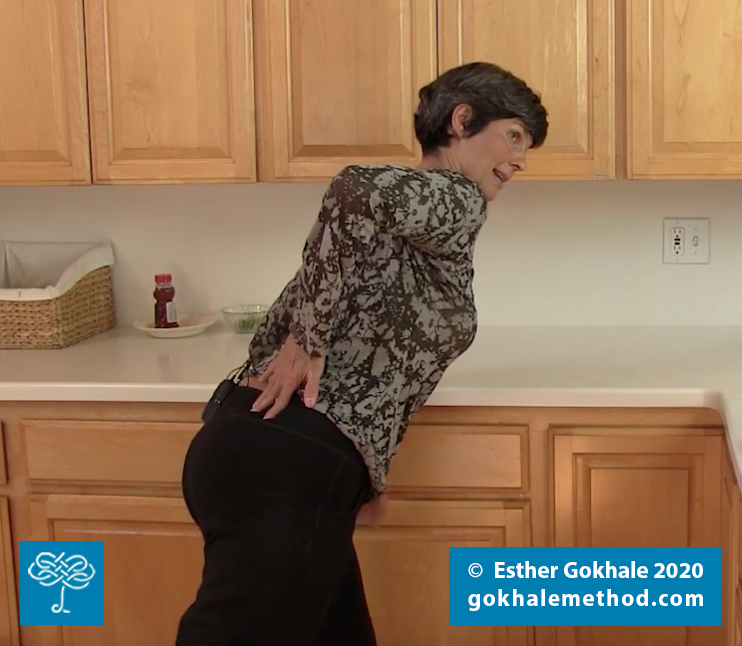
Exercise is wonderful not only for keeping us strong and healthy, but also for relieving stress and anxiety. Now that gyms are shut down again here in California, home exercise is even more important than ever before. In today’s installment, we’ll focus on an exercise I’ve devised over the years designed to isolate and strengthen the oft-overlooked gluteus medius. This muscle is almost always underdeveloped in people who’ve been raised in industrialized cultures. But it is an important player in gait, running, and athletics. It also helps with balance and fall-prevention as we move through the world, no matter our age. And it’s “behind” all the peachy, perky behinds out there in the world!