
Cook Up Some Downtime Training®
Think about all the things that happen in your kitchen. You're orchestrating ingredients—chopping, dicing, grating, sautéing, steaming, roasting. You're wielding an impressive array of gadgets: grinders, mixers, air fryers, microwaves, dishwashers, ovens. You're navigating spaces from floor-level drawers to overhead cupboards, hoisting grocery bags, cantilevering heavy pots, and balancing precarious stacks of dishes.
There's one essential component we don’t think about much—until it starts complaining. Our own body.
What our grandmothers knew (besides their secret recipes)
Previous generations knew a lot about home cooking. I often think of the very different culinary traditions of my Dutch and Indian ancestors. But beyond recipes and techniques, they knew something we’ve largely forgotten: how to use their bodies while they cooked.
I’m a great fan of modern, labor-saving tools—my Instant Pot is a personal favorite. These innovations give us flexibility and free up time elsewhere in our lives. But while we’re in the kitchen, it pays to remember the posture habits that allowed our forebears to spend long hours cooking without the back pain, shoulder strain, and joint trouble that are so common today.
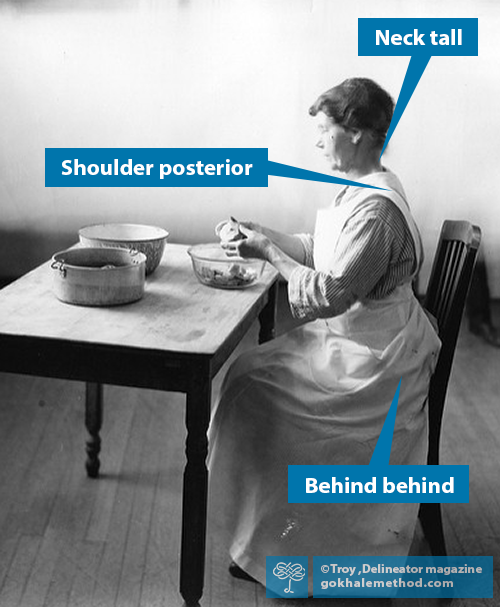
This cook is stacksitting as she prepares food in the 1920s.
The Winter Olympics and Downtime Training®
In my last post I explored why Downtime Training® matters for athletes—from Olympic champions to weekend warriors. The key insight is simple: athletic performance and lifelong physical well-being aren’t built only in workouts. They’re shaped continuously by the positions and movements we repeat during everyday life—especially when we think we’re “doing nothing.”
How you move and rest day to day isn’t just the recovery part between “real” exercise. It is training. Your nervous system is constantly learning and reinforcing movement patterns. That means you’re always choosing a trajectory: reinforcing healthy, functional movements—or locking in dysfunctional ones.
Choosing to support your body in everyday life is what I call Downtime Training®. It’s smart, simple, and surprisingly enjoyable.
Downtime Training® in your kitchen
For many of us, the kitchen is already a sanctuary—a place to pause with coffee, prepare a nourishing meal, or lose ourselves in the aromas of spices or baking bread. We pair this time with podcasts, playlists, or quiet reflection.
Why not add one more dimension? Make your kitchen time Downtime Training® time. Instead of accumulating the usual niggles—tight backs, achy shoulders, sore feet—you can move the way your body was designed to move. When you do, something remarkable happens: muscles work more efficiently, joints reclaim their range of motion, and the ease you've been missing starts to return.
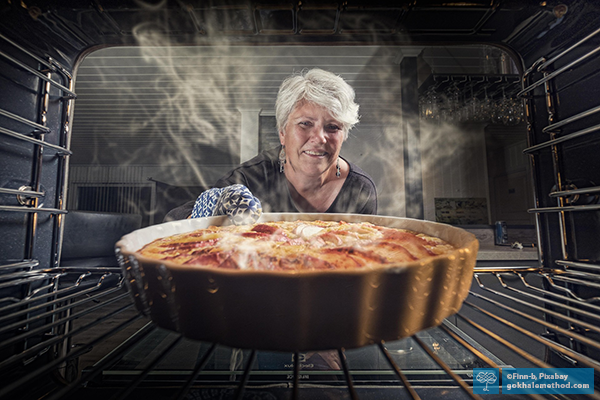
Cooking with confidence and pleasure benefits from postural strength and coordination, as well as kitchen skills.
Dancing, sprinting, and other cooking choreography
Over the years, I’ve turned my kitchen into a living laboratory for Downtime Training®. My experiments range from the joyful—dancing my way to dinner—to the practical, like sprinting up and down the stairs two at a time as I weave cooking tasks between everything else demanding my attention.
If you’d like to see these ideas in action, I’ve captured them in a collection of kitchen videos—complete with posture tips and recipes—available in our On-Demand Video Library (included with a Gokhale® Active Premium subscription). You’ll also find Downtime Training® guides for gardening, bathroom routines, and other everyday activities where your body works harder than you might realize.
Cooking is a theme I love to revisit in our live daily Gokhale Active program. To give you a taste of healthy posture in your kitchen, enjoy the short clip below from a 1-2-3 Move class.
I’m cooking an Indian vegetable curry in Julie’s kitchen in Germany—combined with healthy posture ingredients!
When good training goes home
Here's a story I love. After completing her Gokhale Method® teacher training, Julie Johnson went home and reorganized her kitchen. She moved her most-used cooking tools into the lowest drawers. Why? So she could practice hip-hinging—one of the most beneficial movements for spinal health—more often. A movement she had once dreaded became something she welcomed.
Now she encourages her students to do the same. That's the kind of elegant life-hack that turns ordinary moments into therapeutic ones.
Watch Esther's interview on Downtime Training in the kitchen
Join one of our upcoming FREE Online Workshops using the sign-up below—and start training where it counts most.
Comments
Add New Comment
Login to add commment
Login