

Think about all the things that happen in your kitchen. You're orchestrating ingredients—chopping, dicing, grating, sautéing, steaming, roasting. You're wielding an impressive array of gadgets: grinders, mixers, air fryers, microwaves, dishwashers, ovens. You're navigating spaces from floor-level drawers to overhead cupboards, hoisting grocery bags, cantilevering heavy pots, and balancing precarious stacks of dishes.
There's one essential component we don’t think about much—until it starts complaining. Our own body.
Leslie’s Migraine Success Story

The Gokhale Method® has given me my life back from daily pain. I had two head injuries as a child and started having headaches in third grade. They turned into full migraines in my twenties that got progressively worse until I was in pain daily and in a constant cycle of migraines by my forties. The pain was intense, traveling from my neck to the inside of my shoulder blade and from my temple into my eye.
Optimizing Everything: Millennials, Gen Z, and Great-looking Posture
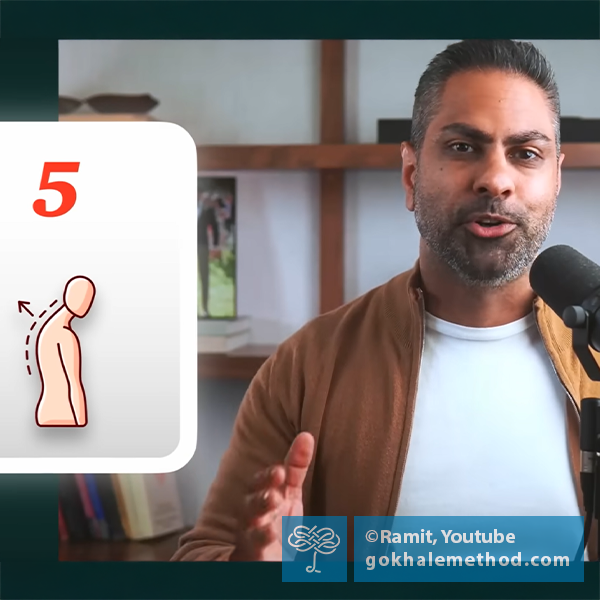
Each generation brings fresh perspectives to the way they live their lives.
Home Exercises Part 3: Cat-Cow
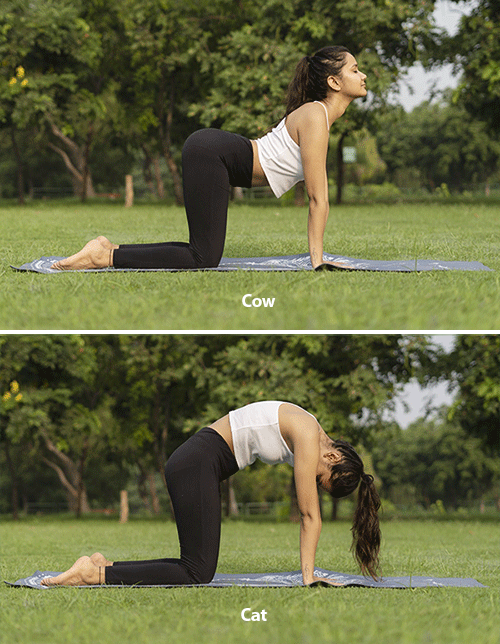
This is our third blog post in the series where we put popular exercises under scrutiny to examine how they stack up—or not—against the principles of healthy posture. Here we are looking at “Cat-Cow,” a common exercise for mobilizing the spine.
Cow is one of the “holy cows” of conventional exercise. Done on all fours, it puts the spine into extension (swaying). It is paired with Cat , which puts the spine into flexion (rounding). Alternating between these postures is widely considered to be a good or even necessary exercise for mobilizing the spine.
Beating Depression with Exercise
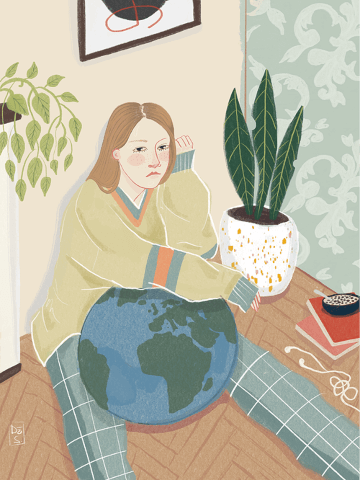
It’s no secret that depression and anxiety are rampant these days. So many people worldwide are feeling the effects of the ongoing pandemic, and dealing with its many, varied results, not to mention other stressors. It can seem that there is so little in our lives that we can have influence over, exacerbating feelings of powerlessness and depression.
In addition to the range of standard therapeutic interventions like psychotherapy and medication, there’s something all of us can adopt that will help boost our mood: adding exercise to our routine.
How to Do a Plank Correctly
Good posture is so important for any workout or athletic endeavor. Exercise of the day: planks!
People often lose their structural integrity by dropping their hips and letting their lower back arch, or by tucking their pelvis, rounding their back, and pushing their shoulders forward.
Left: Poor form marked by dropped hips and arched back. Right: Poor form marked by rounded back and forward shoulders.
It does take more work for your abdominal muscles, particularly your internal obliques, to maintain proper form...but when you're planking, isn't that what you're going for?? Don't fool yourself into thinking you're getting a better workout by doing a longer plank with bad form!
Characteristics of