sacrum

Is Your Chair Setting You Up for Back Problems?

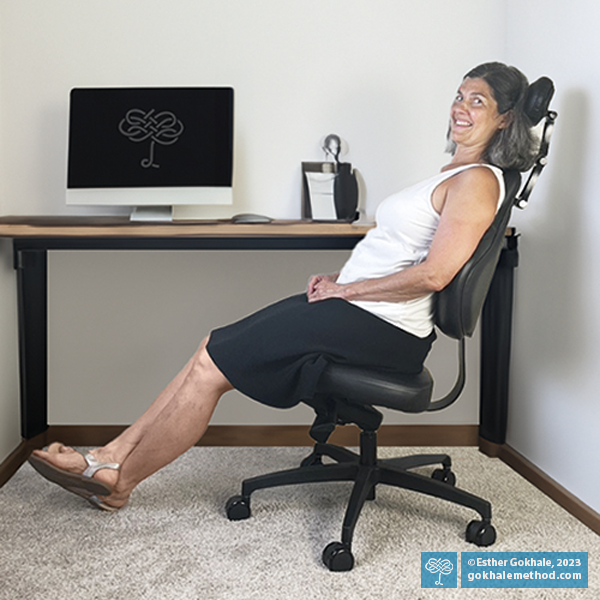
There’s no doubt that dysfunction abounds when it comes to sitting. Most of us spend many hours on poorly designed chairs, in poor posture. As many people know all too well, poor sitting habits can definitely set you up for chronic back pain and tension. The good news? With just a little time and awareness, we can learn to sit well. There is real beauty and functionality in sitting done skilfully! When you do, sitting becomes not only comfortable, but also healthful and therapeutic.

Gliderunning: Part 6: Upper Body

Welcome to the sixth blog post in our series on running. My name is Michelle Ball, and I am a Gokhale Method® teacher living in Tasmania. I am also a lifelong runner and am passionate about sharing the benefits of healthy posture with the running community, be that beginners, seasoned runners, or anyone in between. Even if you walk rather than run, the posture principles outlined in this post can still help you to enjoy an active and pain-free body well into old age. Running with a well-positioned upper body In this post we will consider the upper body. Runners are inclined to pay far less attention to the upper half of the body than the lower half, as they focus on gait pattern, cadence, footwork, and propulsion. This is hardly surprising, but the lower body, while super-busy, really is just half the story.  Healthy posture in the upper body brings the following benefits: Protected spinal structures Improved biomechanics Unimpeded flow and momentum Support that makes the body feel lighter Athletic appearance

Gliderunning: Part 5: Anteverted Pelvis

Welcome to the fifth blog post in our series on running. My name is Michelle Ball, and I am a Gokhale Method® teacher living in Tasmania. I am also a lifelong runner and am passionate about sharing the benefits of healthy posture with the running community, be that beginners, seasoned runners, or anyone in between. Even if you don’t run, but do want an active and pain-free body well into old age, this blog post is for you! What is an anteverted pelvis? Pelvis refers to the bony pelvis, and means basin, or bowl, in Latin. Anteverted means tipped, turned, or inclined forward, from the Latin ante to go before or in front, and vertere to turn. So we are referring to a pelvis that tips forward.