
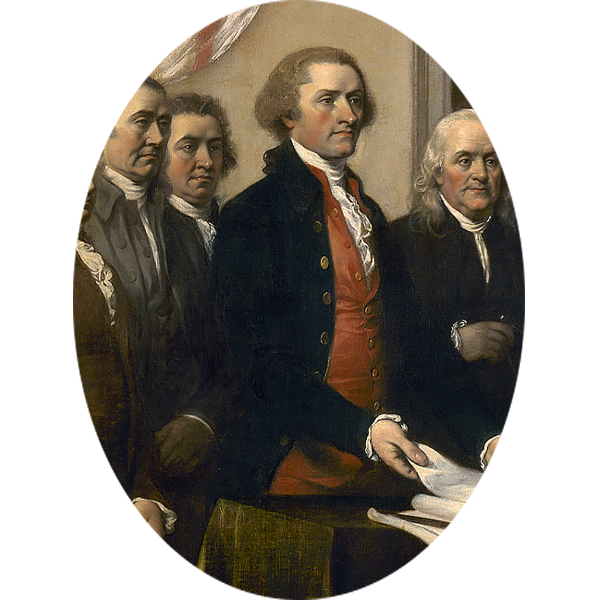
Tomorrow will be the Fourth of July, or Independence Day in the US. It is the national day when US citizens celebrate the 1776 Declaration of Independence from Great Britain. Today I invite you to travel back in time with me to look at a well-known work of art that commemorates that historic event.
The Virtues of a Hard Copy Book in Digital Times
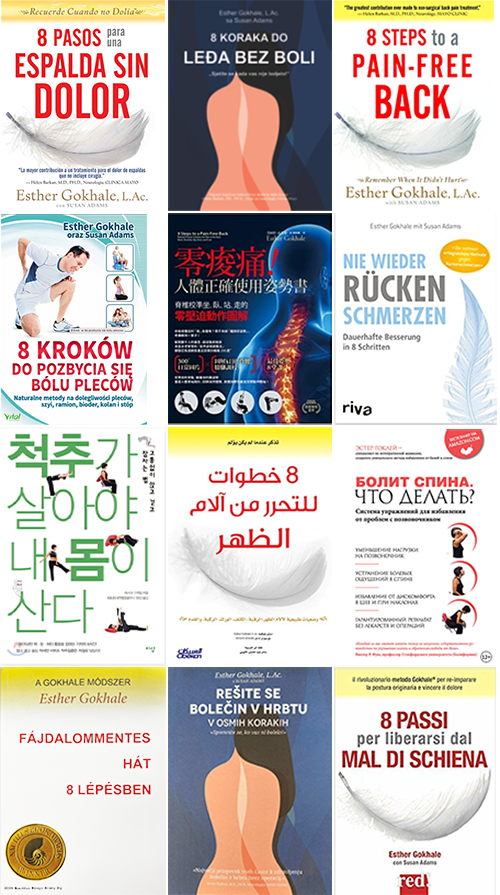
It has been 14 years since my book 8 Steps to a Pain-Free Back came out in hard copy. For years I had wished I had a book to send to those people who called me from the East Coast or Midwest. These were often relatives or friends of people I had worked with in California, who were suffering terrible back pain and needed help. And so I got writing.
A book to solve back pain
Although there was clearly a huge need for a book to solve back pain, I was still surprised to find I had written a bestseller. It reached number two on Amazon.com following our American Public Television program in 2011, and number three following the New York Times article (paywall) naming me “The Posture Guru of Silicon Valley” in 2013. It has now been published in 12 languages (Croatian later this year), and sold over 250,000 copies.
Opening Your Heart Space
This bronze figure shows an open chest and “heart space;” his shoulders are well back and his ribcage is anchored. He is part of a fountain in Piccadilly Circus, London, sculpted by Sir Alfred Gilbert in 1893. Referred to (erroneously) as “Eros,” the figure is in fact Anteros, Eros’ brother, who represents a more mature, less capricious love. Original image courtesy Gareth Williams under CC BY 2.0.
“Heart space” is a term used in yoga to describe the upper part of the chest where the heart is located. Valentine’s Day is an ideal time to give some special attention to this region, and explore its relation to your posture and wellbeing.
The Gokhale Method teaches four particular techniques
Posture Differences in Elite and Plebeian Ancient Egyptians
This famous bust of Nefertiti (c. 1370 – c. 1330 BC) exhibits a forward-protruded head. Original image courtesy Wikipedia user Philip Pikart under CC-BY-SA 3.0.
In my travels, I enjoy visiting museums. In a concentrated space and in a short few hours, I am able to travel back in time and over large distances, and compare people from different cultures. What a remarkable gift from the craftspeople of the past!
Many museums have a well-developed Egyptian collection. The Egyptians’ expertise in preserving their dead as well as the dry Egyptian climate has yielded a bounty of specimens from the distant past. Egyptian artifacts are often spectacular and modern audiences are drawn to Egyptian
Why Does the Oldest Chinese Buddha Figure Slump?
The oldest surviving dated Chinese Buddha figure shows surprisingly slumped posture. Note the forward head, absence of a stacked spine, and tucked pelvis. He would not look out of place with a smartphone in his hand!
This surprisingly hunched Chinese Buddha figure is the oldest dated Chinese Buddha figure that has survived into modern times. The inscription on its base dates it to 338 AD, 500 years after Buddhism came to China from India. Compare the Chinese Buddha figure with this Indian Buddha figure from roughly 800-1000 AD…
This North Indian Buddha figure from the post-Gupta period (7th - 8th century AD) shows excellent form. He has a well-stacked spine, open shoulders, and an elongated