
Dance Your Way to a Healthier Back
For years I puzzled over the very best way to deliver the Gokhale Method® posture reminders that people genuinely need. Once students have absorbed their sitting and standing lessons, they need regular follow-up content that is entertaining, and fresh. Dance turns out to be a particularly wonderful vehicle for ongoing posture reminders, practice, and integration.
What else is so great about dance?
First let’s pay tribute to the physical benefits of dance. Dance strengthens muscles, improves balance, increases flexibility, and builds cardiovascular fitness.
Life presents us with an infinite variety of positional challenges—balances, reaches, twists, crouches. In our ancestral past, daily life prepared us for most of them: hunting and gathering required reaching overhead, squatting low, navigating uneven ground, and changing direction unpredictably. Modern sedentary lifestyles call on very few. This leaves us vulnerable on the occasions when we do encounter physical challenge and surprise—the weekend hike, the uneven pavement, the steep and slippery slope. Dance provides a much wider variety of positions and challenges than contemporary life typically offers—and thus helps us feel and be more capable, and avoid injury and falls.
When it comes to emotional benefits, dance connects us to each other, to music, to culture, to our history. It offers a channel to something deep in human nature that words cannot reach. For millennia, cultures across the world have used dance to mark joy, grief, and celebration. On April 29, International Dance Day, we express gratitude for our heritage as a dancing species.
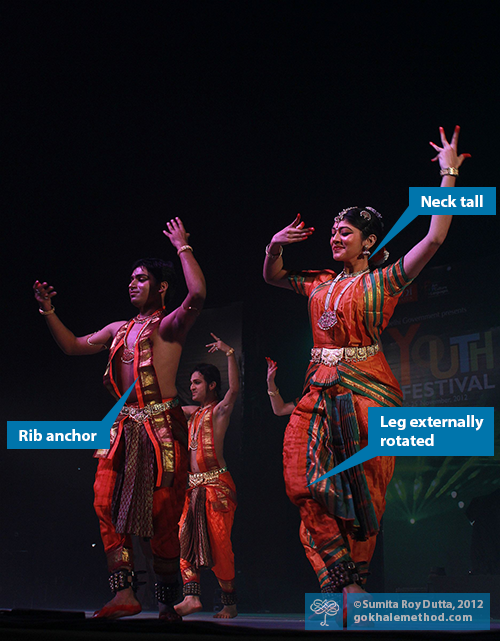
Every culture has its traditional dances and movements. They invariably show excellent form, as with this Indian Bharatanatyam dance. (Performance by Guru Saroja Vaidyanathan students, 2012 Youth Festival.)
Mental benefits of dance
A landmark 21-year study published in the New England Journal of Medicine, led by the Albert Einstein College of Medicine, tracked hundreds of adults aged 75 and older and measured the effect of various leisure activities on rates of dementia. Of all physical activities studied, dancing was the only one that significantly reduced risk—by 76 percent. Crossword puzzles, done at least four days a week, reduced risk by 47 percent. Cycling and swimming registered no measurable benefit at all.
Why is dance so effective for our cognitive health? Neurologist Robert Katzman, commenting on the study, pointed to freestyle social dancing—styles like foxtrot, waltz, and swing—as requiring constant, rapid-fire decision making. Such split-second improvisation forces the brain to regularly create new neural pathways, building a greater complexity of neuronal synapses that make the brain more resilient to aging. People who believe they have two left feet stand to gain the most—because the effort of learning a new, difficult task is precisely what the brain needs.
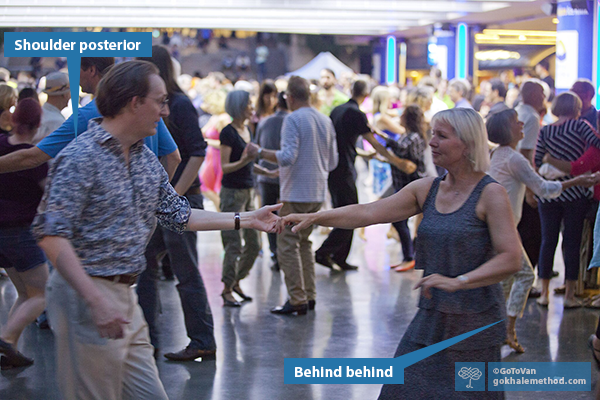
Learning new moves, exercising, and socializing are all known to help keep us youthful.
Our 1-2-3 Move program
Our 1-2-3 Move program uses two dance steps in every session to provide a fresh posture reminder every day. Limiting the instruction to two simple steps allows for a happy medium between repetition without boredom, and not overwhelming the brain with choreography. Posture is the main dish; snippets of dance history, cultural context, and accessible dance steps are seasoning on the side.
One thing we did not entirely anticipate was how often students fall in love with dance for its own sake. Many have gone on to pursue particular styles independently. Our alumna Deborah Pruitt is one such example:
When I found the Gokhale Method I was in almost constant pain unless I was lying on the floor. So that’s what I did, including sleeping on the floor.
Thanks to the myriad of Gokhale lessons and classes, I realized I was free to dance again! I wanted a regular activity so I began line dancing at the senior center. I’m really lucky with classes a few miles from my house so I now dance four or five days a week.
I apply the 1-2-3 Move approach and focus on a particular posture principle while dancing—especially rib anchor! If I feel a twinge or tightness creeping in I use those moments to draw my attention back to the key posture principles.
Sharing much laughter along with the mental challenge of learning new routines everyday really lifts my spirits and keeps me inspired—healthy posture is the key to a great life!
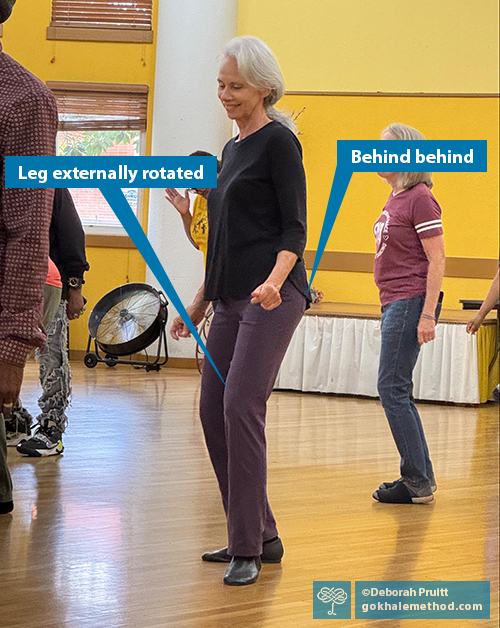
Deborah finds dance the perfect way to combine healthy posture and movement.
An invitation to go deeper
One of the parts of Gokhale Active that I’ve fallen in love with is Sabina's swing-based Sunday classes. Several students have expressed a desire to go deeper, and in response, we’re offering: Swing into Alignment, a six-week alumni course running Wednesdays at 12:15 p.m. PT starting April 29. Places are limited to 20 participants. Packed with posture reminders at every twist and turn, it is also unabashedly a swing dance course. Over six weeks, students will learn a full choreography, culminating in a finale performance from 9:50 to 10 a.m. on the first Sunday 1-2-3 Move Dance Party after the course. If you are a Gokhale Method graduate, you can sign up here for a course starting on April 29. Or join Sabina's summer Swing into Alignment course starting July 20. Details and registration links will also be emailed to you.
In the meantime, whether you're an alum or a beginner, wherever you are today, find a reason to dance!
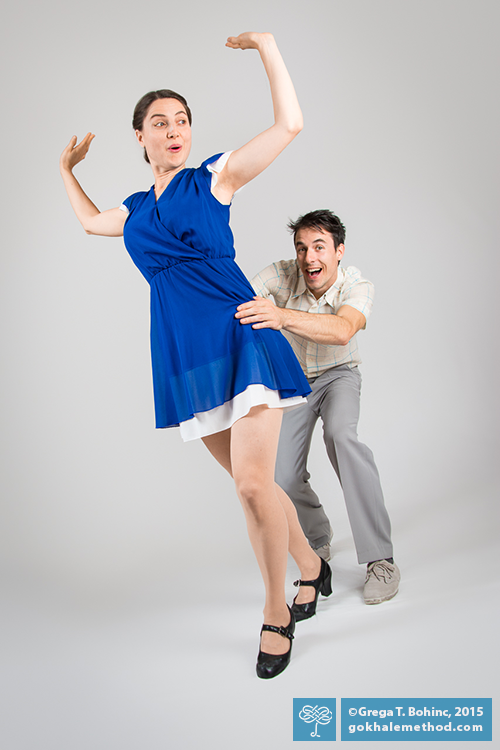
Gokhale Method teacher Sabina Blumauer with her dance partner, Luka. They shared their passion for Lindy Hop with dance communities across Slovenia.
Best next step
Join one of our upcoming FREE Online Workshops using the sign-up below—and learn more about how the Gokhale Method can help you to sit, stand, and dance pain-free.
Comments
Add New Comment
Login to add commment
Login