
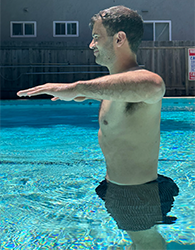
August is peak holiday time across the northern hemisphere, and many of us who live here will find ourselves poolside, or even better, in it!
Being in water has the natural advantage of lifting weight off the joints while providing gentle resistance training. Aching backs or knees can find relief from compression in the natural buoyancy that water provides. This has made pool exercises a popular prescription with physical therapists over many years, especially for post-operative or post-injury rehabilitation.
On land, to relieve pain and compression, people usually use elaborate measures like inversion tables, traction units, or going to outer space! In the Gokhale Method we provide decompression for the lower back relatively simply with the Stretchsit® Cushion or the nubs on our Gokhale™Pain-Free Chair. But stepping into water is the simplest of all, giving you freedom of movement and the ability to strengthen yourself simultaneously.
Get Updates on the Latest Blog Posts

My mother developed Parkinson’s Disease (PD) over 22 years ago. My mom’s brother passed away from PD, and another relative on the maternal side also suffered with it. I also have a more distant “uncle” who is in the early stages of PD, who I visit. This particular disease has loomed large in my family and my life for over two decades, but many of its challenges and what helps will apply to those living with other diseases and their caregivers. In this blog post I would like to share how the Gokhale Method has helped my mom, my family, and me.
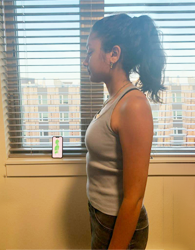
The phrase “it takes a village to raise a child” is thought to originate from an ancient African proverb.
As I have grown into being a parent, uncle, and beyond, I have realized that this quote extends to any age. I have directly experienced this with my own posture journey—my own family “village” has helped me and others dear to me find a near pain-free life through the Gokhale Method®.
My Story: Annoying Body Pains Were Affecting My Fun In Life
In my late thirties, a stream of inflammatory pains permeated my body, including back pain, shoulder pain, knee pain, and—worst of all—plantar fasciitis in my foot. While these weren't absolutely crippling pains, they were painful enough to keep me from enjoying life as I gave up my favorite hobbies—tennis, golf, and playing the piano.
I visited numerous renowned doctors in California. They genuinely tried to help, but nothing resolved my pain. So I began searching for other solutions.
The Key Find: Esther’s book, 8 Steps to a Pain-Free Back
In 2012 I bought Esther’s book, 8 Steps to a Pain-Free Back, as it was highly recommended on Amazon.
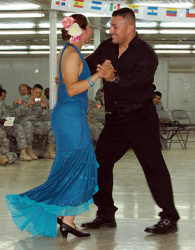
Regular readers and our students will know that I am a great fan of dance—it is a fun, social, and mood-elevating way to get fitter and master healthy posture.
Dance and the importance of length in the spine
The Gokhale Method® focuses on restoring the spine to its natural length, strength, and shape in all positions and activities. In vigorous activities like dance, with higher impact and distortions like twists, side bends, flexions, and extensions, the inner corset technique becomes especially important.
Vision and headaches
We know that challenges with our vision can cause headaches. Squinting in bright light or straining the eyes to bring hazy text into focus can easily result in strain or pain in the eyes, temples, top of the head, or elsewhere.
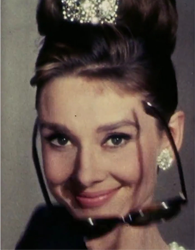
What is less widely acknowledged is that wearing prescription glasses can also cause headaches. An overlooked cause of headaches—and other pains too—is the poor posture we often adopt when wearing glasses. In this post I will be looking at the posture traps to avoid with eyewear—and how to turn wearing glasses to your postural advantage.
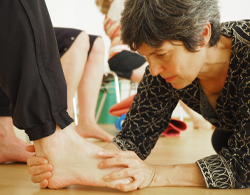
Why is it not a routine practice for podiatrists to observe their plantar fasciitis patients’ stance and gait? Let’s consider how a broader approach that considers the way people stand and walk could improve treatment outcomes for plantar fasciitis patients—and also help prevent recurrences.
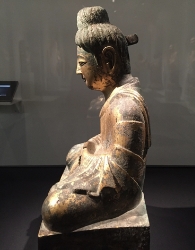
It has been over 60 years since Eastern schools of meditation became widely known in the U.S. and Europe, and meditation became widely practiced, with over 14% of Americans having meditated at least once. If we include those practicing mindfulness techniques, using meditation apps, and attending yoga classes with a meditation component, this figure goes far higher.
The effects of sitting in meditation
The potential benefits of meditation are well known, and include a calmer, clearer mind, lower levels of stress, better sleep, improved relationships with others, and better mental health.
From a posture perspective, whether you sit in meditation regularly or are just getting started, you want the experience to be as healthy for your body as it is for your mind.
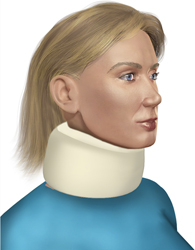
Do you suffer from neck tension, muscle knots, or tingling in your fingers? Do you get frequent headaches?
Or maybe your neck is fine most of the time, but seizes up periodically, leaving you unable to function normally in your job, family life, and recreational activities.
Most neck pain involves compression.
In modern cultures, the head often drifts forward as we slouch and crane our necks towards our computer screens. The weight of the head, (typically 11 lb. or 5 kg—think bowling ball), then requires the muscles at the back of the neck to contract strongly to keep the head up. This contraction compresses the relatively delicate tissues in the area. Not a recipe for a healthy, happy neck. If you have forward head carriage but are symptom-free so far, keep reading for tips that will prevent future problems with the discs, nerves, blood vessels, and bones in your neck.
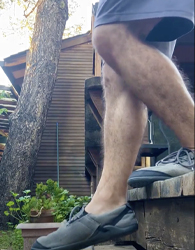
Welcome to our second post on navigating steps and stairs. Our first post looked at how to power yourself up stairs—however, we often hear from our students that their most pressing concern is how to come down stairs.
Are you starting to worry that you may need to set up your bedroom downstairs, or find yourself compromised when visiting places with stairs? Perhaps you have a friend or older relative in this position? Is it possible to maintain or even improve your fitness and mobility in the years ahead? “Life exercises” such as descending stairs, done skilfully, can be transformative and can give many benefits beyond getting you where you want to go.