
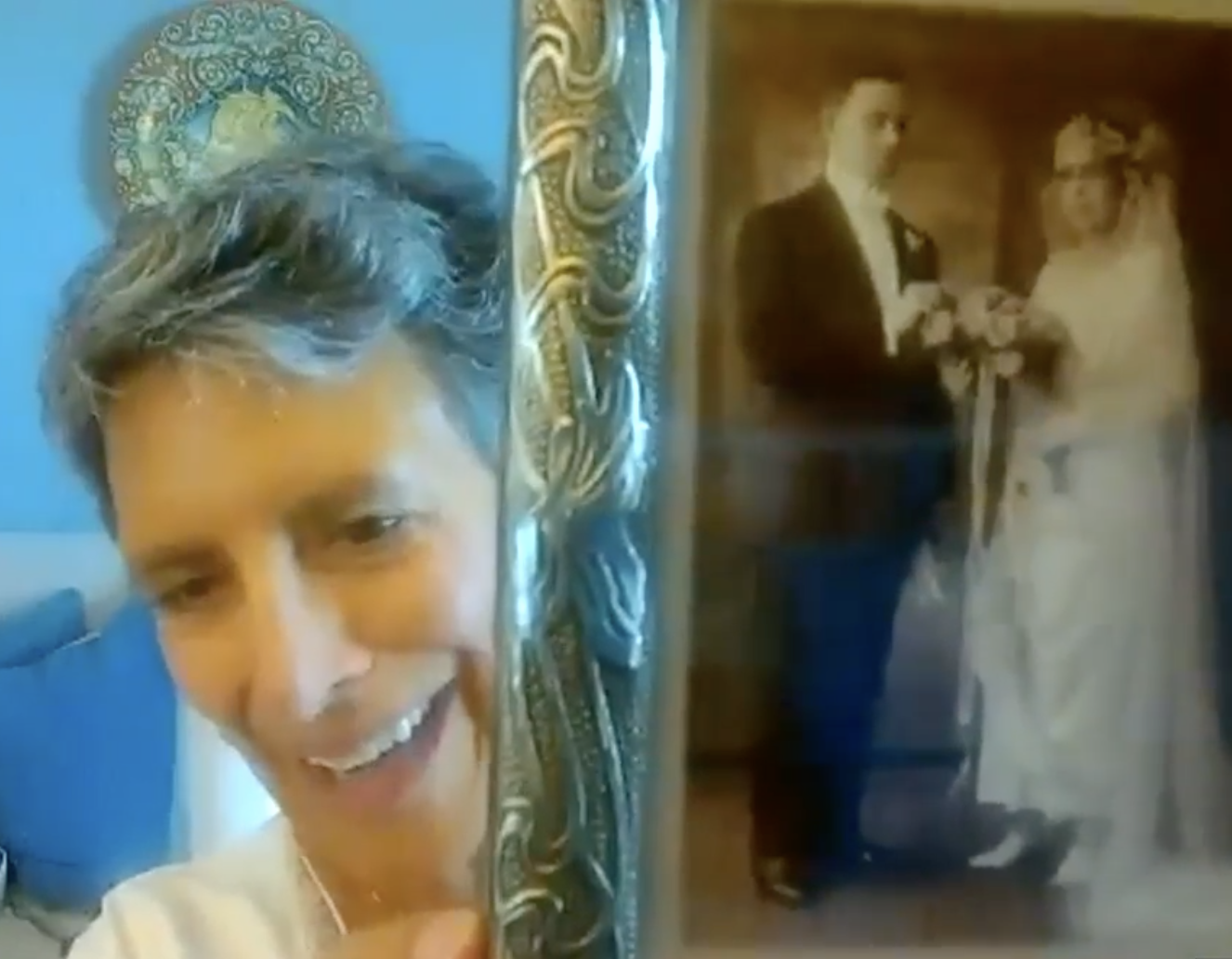
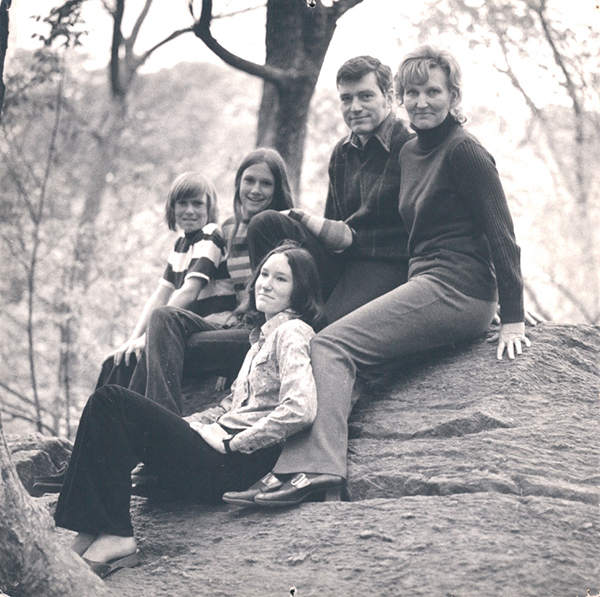
Rediscovering ancestral posture can be fun! In our online 1-2-3 Move program we have had several “Show and Tells” during which participants share old family photographs. The inspiration for healthy posture and positive change that these pictures bring to their descendants, as well as to the online community, is powerful.
In Part 1 of this series we looked at the upper body. Here we are going to consider what our forebears can teach us about healthy alignment for the lower body—specifically, what needs to happen with the pelvis, legs, and feet.
Get Updates on the Latest Blog Posts
Here I am in September 2017 when I began the Gokhale Method—sitting and bending over:
I have kyphosis. My upper back is curved from the shoulders to the bottom of my ribcage. The exact cause of my kyphosis is not known. There are two types of kyphosis: Scheuermann’s and postural. In Scheuermann’s disease, the normal bone growth in the vertebrae is interrupted during adolescence leading the spine to develop wedge-shaped vertebrae which result in a rounded curve in the thoracic spine. I believe I may have been diagnosed with Scheuermann’s Kyphosis at some point, but I don’t know for sure. I would like to think of it as postural because that word opens up more room for change.
I was born with my left leg and foot turned inward. I wore several different braces on my leg and my foot until the age of five. I became a shy and inhibited child, and I remember not wanting to be seen.

At the beginning of the pandemic, my tween daughter was the dancer in my house. When her in-person hip-hop class was canceled, she quickly turned online for inspiration, showering me with her 30-second Tik Toks.
I was amused, but resolute that dancing online was not for me. I had my own exercise regime, at the heart of which were a series of Pilates-based exercises that I had incorporated in the hopes of healing a nagging injury.
But now, 16 months into the pandemic, I’m dancing online too, maybe even more than my 12-year-old. This is thanks to Esther Gokhale and her unbelievably fabulous community who, like me, wanted to find a safe, therapeutic, and fun way of exercising after injuring our backs.
I first heard Esther years ago on a podcast and subsequently checked her book 8 Steps to a Pain-Free Back out of the library. I remember being especially interested in the pictures of women holding their babies so comfortably; I had recently given birth, and I tried my best to imitate the women pictured.
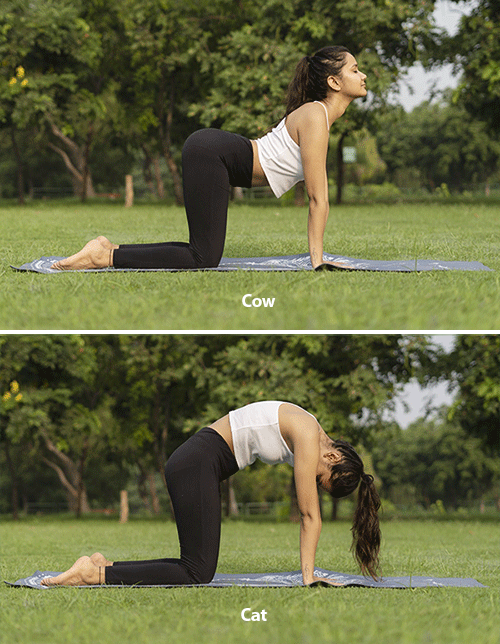
This is our third blog post in the series where we put popular exercises under scrutiny to examine how they stack up—or not—against the principles of healthy posture. Here we are looking at “Cat-Cow,” a common exercise for mobilizing the spine.
Cow is one of the “holy cows” of conventional exercise. Done on all fours, it puts the spine into extension (swaying). It is paired with Cat , which puts the spine into flexion (rounding). Alternating between these postures is widely considered to be a good or even necessary exercise for mobilizing the spine.
If you are fortunate and have photographs going back three, four, or even more generations, you likely possess a compelling tool for posture improvement. How and why exactly are these images so useful
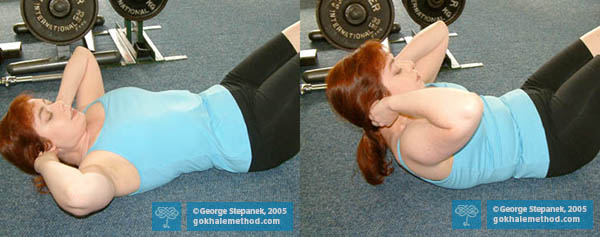
This is our second blog post in the series where we put popular exercises under scrutiny to examine how they stack up—or not—against the principles of healthy posture. Here we are looking at crunches

We assume in our culture that aging will necessarily be accompanied by a loss of height, increasingly stooped posture, loss of muscle strength, and a precarious inability to balance. But is this
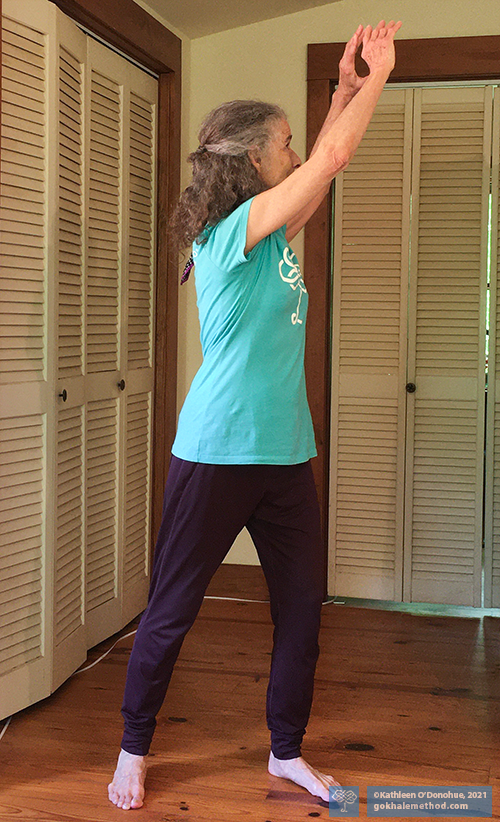
In this blog post Gokhale Method teacher Clare Chapman interviews Roberta Cooks and Kathleen O’Donohue to find out more about their Gokhale Moving Meditation classes. Roberta and Kathleen have been Gokhale Method teachers for 11 and 5 years respectively—and longtime practitioners of Tai Chi Chih (Roberta), and Tai Chi Qigong (Kathleen).*
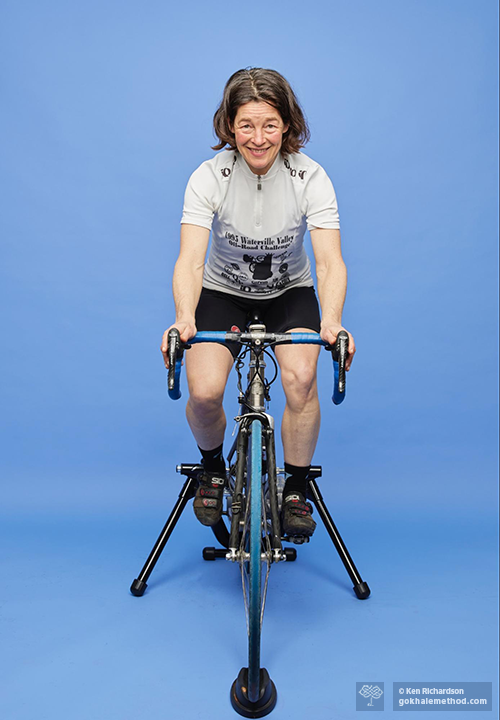
This is Part 3 of a three-post series on cycling with healthy posture by Gokhale Method teacher and longtime cyclist Tiffany Mann. Read Part 1 and Part 2 here.
Spring has arrived, and perhaps like many people, you want to spend more time on your bike! Maybe you’re already an avid cyclist looking for some tips to make cycling more comfortable and sustainable for years to come; or you’ve taken a break and are ready to step back on the pedals. Perhaps you just want to get up those hills!
Even if you are a beginner, it is so satisfying and pleasurable to use your own muscle power to propel yourself on this simple machine; but it is still well worth looking at how to use your energy as economically as possible. Cycling doesn’t have to be superhard work, and you can benefit your posture at the same time.